Your Data Is Still Not Your Own at the Border: The Second Circuit’s Alisigwe Ruling and CBP’s 2026 Device Search Directive 

On September 17, 2026, the U.S. Court of Appeals for the Second Circuit held in United States v. Alisigwe that the government needs neither a warrant nor any level of suspicion to manually search a traveler’s cellphone at the border, and it rejected four district court decisions within the circuit that had required a warrant. The ruling follows CBP’s replacement of its 2018 electronic device search policy with Directive 3340-049B, effective January 1, 2026. Business travelers, in-house counsel, and companies whose employees carry client, pricing, or technical data through ports of entry in New York, Connecticut, and Vermont should revisit their travel practices now. 

Key Takeaways 

  • The Second Circuit held that a manual search of a cellphone at the border is a routine search that requires no warrant and no suspicion, and that the First Amendment imposes no separate warrant requirement. 
  • The court expressly left open whether a forensic search, such as an off-site extraction of a phone’s data, requires reasonable suspicion. 
  • CBP Directive 3340-049B permits basic searches with or without suspicion and limits advanced (equipment-assisted) searches to cases involving reasonable suspicion or a national security concern, with supervisory approval. 
  • Under the directive, officers may not intentionally use a device to access information stored solely in the cloud, and a device that […]

De Minimis No More: What it Means for Importers and Consumers

President Trump’s Executive Order suspending duty-free de minimis treatment of shipments entering the U.S. took effect last week. The de minimis exemption has been used by retailers around the world catering to the American shopper, and the end of the policy is causing a ripple effect around the globe.

What is De Minimis?

De minimis is a Latin term that means “of the smallest things,” “trifling,” “insignificant.” In the U.S., the de minimis rule dates back to the Tariff Act of 1930. Upon passage of the act, individuals and businesses were permitted to import shipments under $200 without paying duties and taxes. 

The intent behind the exemption was to allow CBP to focus on higher-risk and higher-revenue imports and to encourage small-scale trade. In 2016, the U.S. raised the de minimis threshold to $800 with the passage of the Trade Facilitation and Trade Enforcement Act. 

After the 2016 change, de minimis shipments surged, from 139 million in FY 2015 to 1.36 billion in FY 2024. International retailers took advantage of the new threshold, and many U.S. policymakers began referring to de minimis as a “loophole.” 

Citing safety and fairness concerns, there were dozens of unsuccessful efforts in the U.S. Congress to end de minimis. Finally, the Big Beautiful Bill of 2025

By |2025-09-15T11:19:08-04:00September 15, 2025|ACE, Enforcement, Import, International Travel, Supply Chain, Tariffs, U.S. Customs and Border Protection (CBP)|Comments Off on De Minimis No More: What it Means for Importers and Consumers

Diaz Trade Law Invites the Trade Community to Two Free Webinars this Summer!

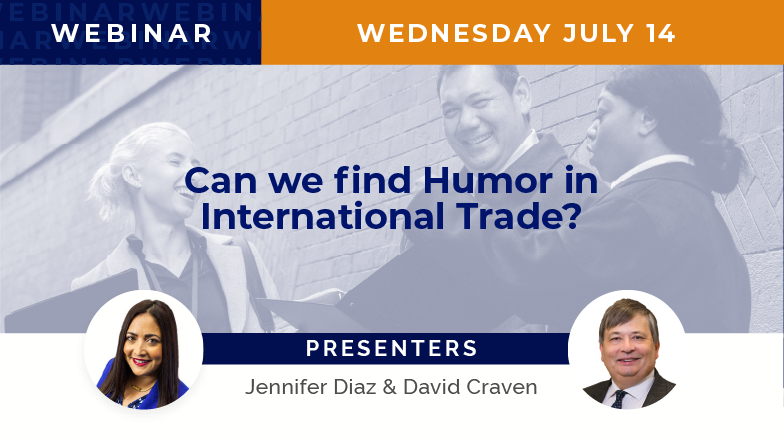
Celebrate the summer season with two light hearted webinars on International Trade. Diaz Trade Law invites the trade community to two FREE webinars; space is limited – register today! Laugh with us at the Humor in International Trade webinar and learn insightful facts about the impact of international trade on American history during The First Laws — History of Customs and Revenue Law. More information about each webinar is provided below:

Can We Find Humor in International Trade? – July 14, 2021 at 12:00 PM ET

This one-hour webinar describes humor in trade. International Trade is a serious subject, but within it, bits of humor can be found. Register today to hear from this experienced duo and discover many of the oddities and idiosyncrasies prevalent in our modern-day international trade system.

President and Founder of Diaz Trade Law, Jennifer (Jen) Diaz is a Chambers ranked, Board Certified International Attorney specializing in customs and international trade.

[…]

Treasury Imposes Further Sanctions on Iran

Background on Iran Sanctions 

The United States has imposed restrictions on activities with Iran under various legal authorities since 1979, following the seizure of the U.S. Embassy in Tehran following the Iranian Revolution. In October 2015, the United States, the United Kingdom, France, China, and Russia, as well as Germany (known collectively as the P5 +1) met with Iran and successfully negotiated the Joint Comprehensive Plan of Action (“JCPOA”). Pursuant to the JCPOA, Iran agreed to roll back parts of its nuclear program in exchange for relief from some sanctions. According to United Nations Security Council Resolution 2231, the JCPOA would result in “the comprehensive lifting of all UN Security Council sanctions as well as multilateral and national sanctions related to Iran’s nuclear program, including steps on access in areas of trade, technology, finance, and energy.” The few years of decreased economic sanctions towards Iran came to an end in May 2018 when the Trump administration unilaterally withdrew from the JCPOA. The return of increased U.S. sanctions towards Iran came into effect in November 2018.

[…]

By |2021-10-12T15:07:54-04:00January 12, 2021|Best Practices, China Trade War, Customs Expert, Enforcement, Export, Import, International Business, International Law, International Trade, International Travel, IRAN|Comments Off on Treasury Imposes Further Sanctions on Iran

USDA National Organic Program – Enforcement & Compliance Overview

What’s the National Organic Program?

Established by Congress and announced in 2000, the U.S. Department of Agriculture’s (“USDA”) National Organic Program (“NOP”) is a federal regulatory program which develops and enforces uniform national standards for organically-produced agricultural products sold in the United States. NOP operates as a public-private partnership which accredits third-party organizations to certify that farms and businesses meet the national organic standards. By enforcing its standards, NOP ensures a level playing field for producers while protecting consumer confidence in the integrity of the USDA organic seal.

[…]

By |2021-10-12T15:10:11-04:00January 5, 2021|Best Practices, Customs Expert, Enforcement, Export, Import, International Business, International Law, International Trade, International Travel, U.S. Department of Agriculture (USDA)|Comments Off on USDA National Organic Program – Enforcement & Compliance Overview

New National Space Policy Drives American Leadership in Space Commerce

National Space Policy Unveiled

On December 9, 2020, the White House released the National Space Policy of the United States of America. Among other objectives, the policy seeks to drive U.S. leadership in space commerce by encouraging the cultivation of U.S. industrial capacity in space innovation.


[…]

By |2021-10-12T15:13:10-04:00December 29, 2020|Best Practices, China, China Trade War, Customs Expert, Enforcement, Export, Import, International Law, International Trade, International Travel|Comments Off on New National Space Policy Drives American Leadership in Space Commerce

A Year in Review!

2020 has been a difficult year filled with immense challenge and change (to say the least). From all of us at Diaz Trade Law, we are incredibly thankful and grateful for your support. Despite a pandemic, Diaz Trade Law still managed to save our clients MILLIONS of dollars in 2020. It is with great joy that we finish off 2020 filled with numerous achievements and accomplishments. We look forward to assisting you in what we envision will be a better and brighter 2021!

[…]

BIS Expands Export Restrictions Targeting China’s Largest Chipmaker

Last week, the U.S. Department of Commerce’s Bureau of Industry & Security (“BIS”) informed some U.S. semiconductor manufacturers via a confidential letter that they would require export licenses before exporting certain products to China’s largest semiconductor manufacturer, Semiconductor Manufacturing International Corporation (“SMIC”). Although the letter is not available for public view, a September 28, 2020 Wall Street Journal article that broke the story said that the Commerce Department was concerned about high risks of diversion to a military end use. This additional export license requirement is part of a broader pattern of increased export restrictions, particularly to China.

[…]

A Year in Review!

DTL saved clients MILLIONS of dollars in 2019. It is with great joy that we finish off 2019 celebrating our fourth anniversary! We would like to thank each of you for being an integral part of making DTL a success.

This year has been filled with numerous achievements and accomplishments. We are grateful for the clients who have entrusted their trade and customs issues to us, and we look forward to assisting you in 2020!

Below we share some of our 2019 success stories with you.

[…]

Go to Top